
Toilet Training Dogs: A Calm, Practical Guide for Puppies and Adult DogsToilet training doesn’t need to be stressful or take months to achieve. With consistency, supervision, and clear routines, most dogs can learn where to eliminate quickly and reliably. This guide explains how toilet training works, why accidents happen, and how to support your dog without punishment or confusion.
How Dogs Learn Where to GoDogs naturally prefer not to eliminate in areas they consider their living or sleeping space. Toilet training works by gently teaching your dog which areas are “home” and which areas are appropriate toilet locations.
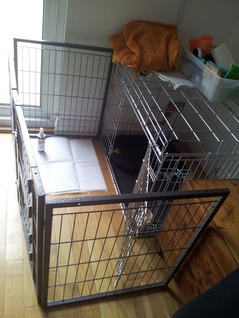
Supervision is essential. When your dog is not actively being watched, they should be in a safe, confined area such as a crate or playpen. This prevents accidents and allows you to notice early signs that your dog needs to go out, such as sniffing, circling, pacing, or suddenly disengaging from play. |
. Author Sarah Mahmood . Created 18th January 2024 . Updated 24th December 2025 .
|
How Long Can a Puppy Hold It?
A general guideline for puppies is their age in months plus one hour. For example, a two-month-old puppy may manage around three hours at most. This varies depending on activity level, sleep, excitement, and feeding times.
Sleeping puppies may hold it longer, while active or recently fed puppies may need to go out very frequently. Some puppies can hold their bladder overnight, while others need night-time trips outside for a while. This improves naturally as bladder control develops.
Using Crates Effectively
Crates can be a helpful toilet training tool when used correctly. The crate should be just large enough for your dog to stand up, turn around, and lie down comfortably — not large enough to toilet in one corner and sleep in another.
Most dogs will try to avoid eliminating where they sleep, which helps them learn bladder control. If a dog has previously been forced to live in unclean conditions, this instinct may be weakened and training may take longer.
Teaching the House Is a Toilet-Free Zone
Start by allowing your dog access to only one main area of the home while supervised. This space gradually becomes part of their living area, making them less likely to eliminate there.
Once your dog has remained accident-free in that area for two to three weeks, you can slowly open up another small space. Spend time feeding, playing, and relaxing in each new area before expanding further. This gradual process helps your dog understand that the entire house is not a toilet.
Creating a Clear Toilet Routine
Dogs learn best through predictable routines. Taking your dog out in a purposeful, consistent way makes it easier for them to understand what is expected.
A simple routine looks like this:
Even if you have a fenced garden, using a lead during training helps learning happen faster by keeping the focus on the task.
A simple routine looks like this:
- Take your dog outside on a lead, through the same door, to the same toilet area
- Stand calmly and quietly — no playing or distractions
- If your dog begins to sniff or circle, calmly cue them
- As soon as they eliminate, praise warmly and reward
- After toileting, allow playtime or a walk as a bonus reward
Even if you have a fenced garden, using a lead during training helps learning happen faster by keeping the focus on the task.
What to Do If an Accident Happens
Accidents are part of learning. How they are handled makes a big difference.
If you catch your dog in the act, calmly interrupt and take them outside immediately to their toilet area. If you don’t catch it happening, simply clean it up thoroughly using an enzyme cleaner.
Punishment is not helpful. Dogs do not understand that they should eliminate outside instead of inside — they may only learn that eliminating near people is unsafe, leading them to hide accidents rather than improve control.
If you catch your dog in the act, calmly interrupt and take them outside immediately to their toilet area. If you don’t catch it happening, simply clean it up thoroughly using an enzyme cleaner.
Punishment is not helpful. Dogs do not understand that they should eliminate outside instead of inside — they may only learn that eliminating near people is unsafe, leading them to hide accidents rather than improve control.
When Does My Dog Need to Go Out?
Most dogs need to eliminate:
- After waking up
- After eating
- After playing
- During periods of increased activity
Feeding, Schedules, and Toilet Training
Regular feeding times make toilet training easier. Scheduled meals help regulate digestion so you can better predict when your dog will need to go out.
Leaving food down all day makes elimination patterns unpredictable and can slow training. Measuring meals and feeding at consistent times supports faster learning and makes reward-based training more effective.
Excitement or Submissive Urination
Some puppies urinate small amounts when excited or nervous. This is involuntary and usually improves with maturity. The best approach is calm, low-key greetings and avoiding sudden excitement. Making a fuss can unintentionally increase the behaviour.
Regression After Progress
If a previously toilet-trained dog starts having accidents again, consider what has changed. New routines, stress, household changes, or illness can all affect toilet habits. Returning briefly to a structured routine often resolves the issue quickly.
If there have been no changes and accidents continue, a veterinary check is recommended to rule out medical causes.
When to Seek Professional Help
If toilet training feels overwhelming, progress has stalled, or your dog is showing anxiety around elimination, a qualified force-free trainer can provide tailored guidance and reassurance. Early support often prevents frustration and speeds up success.
With patience, consistency, and clear routines, most dogs learn reliable toilet habits — allowing everyone to relax and enjoy life together.
© Copyright Elite Dog Training